How to Find a Top PD Charger Supplier in China?

Time:2026-09-23 Author:Oliver
0%

Finding a dependable Pd Charger Supplier in China requires more than comparing prices on a marketplace. The real test begins inside the factory.

Grand View Research estimates that the global power adapter market reached approximately USD 15.7 billion in 2023. Its report also forecasts continued growth through 2030, driven by smartphones, laptops, and GaN-based chargers. These figures show strong demand, but market growth does not guarantee supplier quality. Estimates differ between research firms. That deserves attention.

A capable supplier should explain its power architecture clearly. Ask about USB Power Delivery profiles, GaN transistor selection, thermal protection, efficiency testing, and firmware control. Request recent laboratory reports, not only polished product photographs. A reliable factory should provide samples with visible markings, stable output readings, and traceable component information.

Jeffrey Ravencraft, USB Implementers Forum President and COO, has said, “USB Type-C is the future of connectivity.” His statement highlights an important point: compatibility is now central to charger purchasing. However, a USB-C port alone proves very little.

Look closer.

Check whether the Pd Charger Supplier supports the required voltage and current combinations. Review factory audits, production capacity, warranty procedures, and communication speed. Intertek, TÜV, or UL test documentation can strengthen confidence, although certificates still require verification. A supplier may present an impressive audit and still struggle with consistency during high-volume production.

The best decision combines engineering evidence, factory experience, and honest risk assessment. Cheap quotations can hide weak testing, unstable components, or delayed replacements. Some uncertainty remains. That is normal. A careful sourcing process makes it manageable.
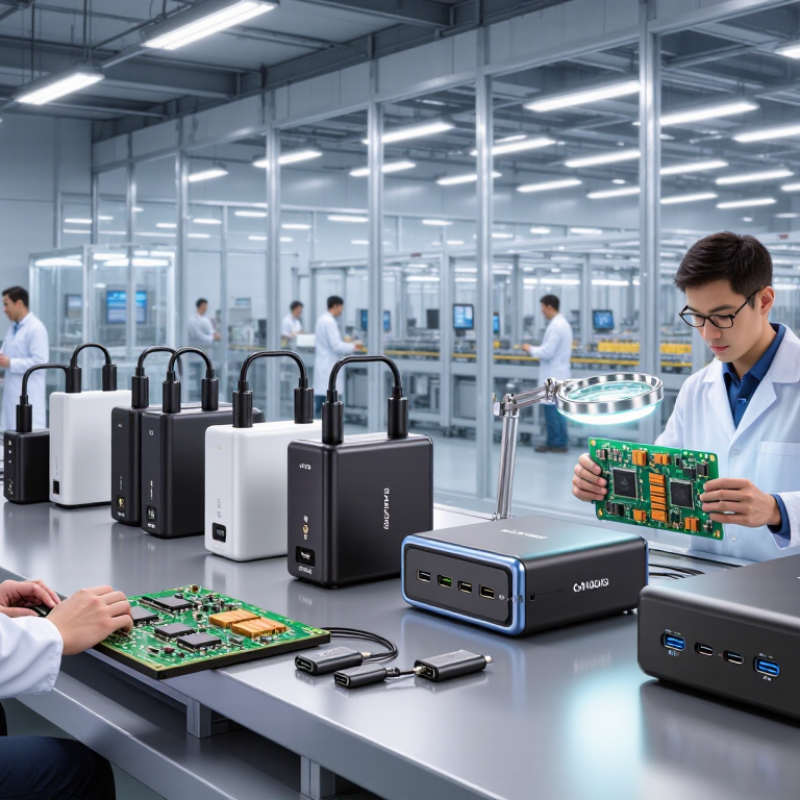
How to Find a Top PD Charger Supplier in China?

Define Your PD Charger Requirements and Supplier Criteria

Finding a reliable PD charger supplier in China starts with a precise requirement sheet. Define the output range, such as 20W, 65W, or 100W, before contacting factories. State the required USB-C ports, input voltage, plug types, cable inclusion, and housing material. If your product needs fast charging, specify supported power profiles and voltage levels. Vague requests create vague quotations.

Safety and compliance criteria deserve equal attention. Ask for recent test reports, factory quality certificates, and production records for similar chargers. Confirm whether the supplier can provide samples from the same production line, not only attractive showroom units. Inspect the charger’s temperature, charging stability, port fit, and performance after repeated use. Small details matter. A loose port can damage customer trust.

Supplier evaluation should also include engineering support, minimum order quantity, lead time, packaging control, and communication speed. Request a written quality agreement with measurable limits for defects and output variation. A low price may look efficient, but it can conceal weaker components or inconsistent testing. One practical lesson is uncomfortable: the cheapest supplier is rarely the lowest-cost choice after returns and delays. I would compare at least three factories, test pilot samples, and record every concern. Even a careful checklist can miss something, so leave room for independent inspection and honest reconsideration.

Research China’s PD Charger Manufacturing Market

Researching China’s PD charger manufacturing market should begin with demand, not supplier lists. IDC’s 2024 Worldwide Quarterly Mobile Phone Tracker recorded about 1.24 billion global smartphone shipments. This volume supports strong charger demand, but it does not guarantee stable orders. Buyers should compare factory capacity, export experience, testing systems, and production schedules.

Technical capability matters. The USB Implementers Forum states that USB Power Delivery 3.1 can support power levels up to 240 watts. A capable Chinese manufacturer should explain its power architecture, thermal design, protection circuits, and certification process clearly. Ask for test reports covering overvoltage, overheating, short circuits, and repeated plug cycles. Examine real samples under load, not only polished product photos.

Market research reports often describe China as a major electronics manufacturing hub, yet supplier quality varies sharply between regions and factories. Visit the production line when possible. Check whether automated assembly, aging tests, and final inspections happen in-house. Request traceable component records and a written failure-handling process. A spreadsheet can still lie. I would also compare at least three quotations, because an unusually low price may hide weaker components, limited testing, or unstable labor planning. The best supplier is not always the cheapest one.

How to Find a Top PD Charger Supplier in China? — Research China’s PD Charger Manufacturing Market

Category Research Dimension Verified Technical or Market Benchmark Evidence to Request from a Supplier Why It Matters Reference Framework
Power Capability USB Power Delivery version USB PD 3.0 supports Standard Power Range applications up to 100 W. USB PD 3.1 extends the specification to Extended Power Range applications up to 240 W. Product specification, power profile table, firmware version, and independent test report. Confirms whether the charger can meet the required laptop, tablet, phone, or multi-device power demand. USB Power Delivery specifications
Fast-Charging Function Programmable Power Supply compatibility USB PD PPS commonly uses adjustable voltage from approximately 3.3 V to 21 V, subject to the product’s declared power and current limits. PPS voltage/current range, PDO/APDO report, and charging test results with target devices. Improves charging compatibility and can reduce conversion loss and thermal stress on supported devices. USB PD PPS requirements
Port Architecture Number and type of output ports Single-port and multi-port chargers require clearly defined power allocation when several outputs operate simultaneously. Single-port maximum output, total output, simultaneous-use power map, and port-priority logic. Prevents performance disputes caused by a high single-port rating that falls significantly during multi-port use. Supplier datasheet and laboratory verification
Electrical Input Input voltage and frequency range Global-market adapters commonly specify 100–240 V AC and 50/60 Hz, but the exact range must be confirmed for each model. Label artwork, input-rating test report, surge test result, and country-specific plug configuration. Determines whether one model can be legally and safely used across multiple target markets. Product rating label and applicable safety standard
Safety Compliance Electrical safety certification IEC 62368-1 is a widely used safety standard for audio/video, information, and communication technology equipment, including many external power supplies. Valid certificate, CB test certificate or report where applicable, critical-component list, and factory address consistency. Reduces risks involving electric shock, fire, abnormal operation, and certification rejection. IEC 62368-1 and applicable national standards
China Market Access China Compulsory Certification applicability CCC requirements depend on the product category, intended use, electrical specification, and current Chinese product catalogue; applicability must be checked before sales in China. CCC certificate when required, catalogue classification, certification scope, and certificate validity verification. Avoids selecting a model that cannot be legally marketed in mainland China. China Compulsory Certification regulations
EMC Performance Electromagnetic compatibility Power adapters are normally evaluated for conducted and radiated emissions, harmonic current, voltage fluctuation, and immunity according to the destination market. EMC test report, emission margins, immunity results, and test configuration matching the final product. Minimizes interference with nearby electronics and reduces the risk of failed import or compliance testing. IEC 61000 series, CISPR requirements, and destination-market rules
Thermal Design Temperature rise and protection functions A credible design should specify over-voltage, over-current, short-circuit, over-temperature, and overload protection appropriate to the circuit topology. Full-load temperature test, derating curve, protection recovery behavior, and enclosure material information. Supports long-term reliability and lowers the likelihood of thermal failures in compact high-power products. Safety test plan and engineering validation test records
Factory Capability Manufacturing location and industrial cluster China’s major electronics and power-supply manufacturing activity is concentrated in the Pearl River Delta and Yangtze River Delta, with additional production capacity in other coastal manufacturing regions. Registered factory address, production-line photographs or video audit, equipment list, and local supplier-chain details. A dense local supply chain can improve component access, engineering response, and production scalability. China electronics manufacturing industry structure
Quality Management Process control and inspection system ISO 9001 provides a recognized quality-management framework, but certification alone does not prove product quality or manufacturing capacity. ISO 9001 certificate, incoming inspection records, in-process controls, final inspection report, and corrective-action records. Shows whether quality is managed through repeatable processes rather than only final inspection. ISO 9001 and ISO 2859-1 sampling principles
Component Traceability Critical component control High-power chargers require controlled specifications for semiconductors, transformers, capacitors, fuses, cables, connectors, and thermal materials. Approved BOM, second-source list, incoming material records, lot traceability, and change-notification procedure. Prevents unapproved substitutions that can change safety, efficiency, or charging performance. BOM control and engineering change management
Customization OEM/ODM development capability Customization may involve enclosure design, port layout, firmware, plug type, cable specification, packaging, label, and compliance testing. Engineering team profile, development workflow, sample approval process, tooling ownership, and change-control terms. Helps distinguish a genuine manufacturer from a trading intermediary with limited technical control. Supplier audit and product-development documentation
Export Readiness Destination-market documentation Certification needs vary by destination. Common documentation may include safety, EMC, environmental, plug, packaging, and customs information. Declaration of conformity where applicable, test reports, user manual, carton marks, HS classification proposal, and shipping documents. Reduces customs delays, relabeling costs, and compliance problems after shipment. Destination-market import and product-compliance rules
Commercial Evaluation Quotation comparability A meaningful comparison should use the same power rating, port configuration, plug, cable inclusion, packaging, Incoterm, certification scope, and sample requirements. Itemized quotation showing tooling, testing, packaging, freight assumptions, payment terms, warranty, and replacement policy. Prevents a low unit price from concealing certification, tooling, packaging, or after-sales costs. RFQ comparison sheet and commercial due diligence
Supplier Verification Manufacturer versus trading company The legal entity on the quotation, bank account, certification documents, factory address, and export documents should be consistent or clearly explained. Business registration details, factory audit, production capacity statement, certification-owner information, and pre-shipment inspection agreement. Improves accountability and clarifies who controls design, quality, production, and warranty service. Supplier due-diligence checklist
Evaluation Note: Certification requirements, product scope, and test standards must be confirmed for the final model and destination market. Supplier claims should be verified against current certificates, test reports, samples, and factory-audit findings.

Verify Supplier Credentials, Quality Standards, and Certifications

Finding a reliable PD charger supplier in China starts with verified credentials. Request the company’s business license, export history, and factory address. Confirm whether the supplier owns production lines or uses a subcontractor. A trading company may still be capable, but its quality controls need closer inspection. Ask for recent factory audit reports, not only polished photographs.

Quality standards should match the charger’s target markets and power ratings. Check for ISO 9001 certification, relevant electrical safety reports, and applicable regional approvals. For USB power products, review testing against standards such as IEC 62368-1 and USB Power Delivery requirements. Verify each certificate with the issuing organization. The report should show the exact model number, input range, output profiles, and factory name. A certificate covering another model is not enough.

Request production samples before placing a large order. Test charging stability, temperature, port fit, protection against overvoltage, and performance under continuous load. Ask how the supplier records component batches and handles failed units.

I once treated a certificate as complete proof, but the sample revealed inconsistent heat control. That mistake was avoidable.

Audit records can also become outdated. Schedule a live factory video inspection or an independent audit, then compare mass-production units with the approved sample. Keep written records. Small gaps often matter.

Compare Product Samples, Pricing, Capacity, and Lead Times

How to Find a Top PD Charger Supplier in China?

Product samples reveal more than polished catalog photos. Request the same wattage, plug type, and housing finish from several suppliers. Test charging speed with phones, tablets, and laptops. Check heat after thirty minutes. Inspect cable ports, labels, screws, and molding edges. A sample should include test reports and clear electrical specifications. Ask whether the sample uses production materials. Some suppliers send upgraded samples that differ from mass production units.

Pricing needs careful comparison. Ask for unit prices at several quantities, such as 500, 2,000, and 10,000 pieces. Separate the charger, packaging, testing, tooling, and shipping costs. A low quote may exclude safety testing or export packaging. Request payment terms and a written validity period. I once compared two quotes and missed a small tooling charge. That mistake changed the real cost. Build a complete cost sheet before negotiating.

Capacity and lead time should match your sales plan. Ask for monthly output, current factory loading, and the number of assembly lines. Request a production schedule with sample approval, material preparation, assembly, testing, and inspection dates. A supplier claiming fast delivery should explain its stock position. Confirm the lead time for both trial orders and repeat orders. Also ask how delays are reported. A factory may have strong capacity but weak communication. That deserves attention. Keep written records, approve a pre-production sample, and use an independent inspection when the order value justifies it.

How to Find a Top PD Charger Supplier in China?

Comparison of anonymized supplier benchmarks for a 65W USB-C PD charger RFQ.

Supplier Profile Sample Pass Rate Unit Price Monthly Capacity Lead Time
Supplier A 98% US$8.40 80,000 units 28 days
Supplier B 95% US$7.90 120,000 units 35 days
Supplier C 92% US$7.30 160,000 units 42 days
Supplier D 89% US$6.80 200,000 units 49 days

The chart converts each procurement factor into a 0–100 evaluation score. Sample quality is weighted at 35%, pricing at 25%, production capacity at 20%, and lead time at 20%. The benchmark assumes a 1,000-unit MOQ and should be verified through current quotations, certification documents, factory audits, and pilot orders.

Evaluate Communication, Customization, and After-Sales Support

A reliable PD charger supplier in China should communicate with precision, not just speed. Ask for a clear reply within one business day. The sales team should explain wattage, charging protocols, safety testing, and production limits without vague promises. Request drawings, test reports, and a sample schedule. Details matter.

Customization shows real engineering ability. Explain your target device, plug type, logo method, housing material, and expected order volume. A capable supplier will identify heat, size, and certification challenges early. They should provide a working sample before mass production. Check the charger with your own cables and devices. I once trusted a neat sample too quickly, and the final housing felt warmer than expected. That mistake taught me to test under continuous load.

After-sales support reveals whether the supplier values a long relationship. Ask who handles defective units, how quickly they respond, and which records they keep. A dependable team can trace batch numbers, inspection results, and replacement decisions. Keep these points in writing. Do not rely only on chat messages. Some suppliers communicate well before payment, then respond slowly after delivery. That risk deserves attention. Also ask for production photos and random inspection options. A strong supplier accepts reasonable questions, including uncomfortable ones, and improves the process when evidence exposes a weakness.

FAQS

What details should I include in a PD charger supplier requirement sheet?

State the wattage, such as 20W, 65W, or 100W. List USB-C ports, input voltage, plug types, and cable requirements. Include housing material and supported charging profiles. Vague requests produce vague quotations.

How can I verify a supplier’s factory credentials?

Request the business license, export history, and complete factory address. Confirm whether the supplier owns production lines or uses subcontractors. Ask for recent audit reports, not only factory photographs. A trading company may still work, but controls need closer inspection.

Which certifications and test reports should I review?

Check electrical safety reports and certifications for your target markets. Review documents covering the exact model number and factory name. Confirm the input range and output profiles match your product. A certificate for another model is not enough.

What should I test before placing a large order?

Test charging stability, surface temperature, port fit, and continuous-load performance. Use your own cables and several compatible devices. Check protection against excessive voltage and unstable output. Test it longer. A short test can hide heat problems.

How can I judge a supplier’s production quality?

Ask for samples from the actual production line. Compare approved samples with later mass-production units. Request component batch records and failed-unit handling procedures. Keep written inspection records. Small gaps matter.

What communication standards should I expect from a reliable supplier?

Request clear replies within one business day. The team should explain wattage, charging protocols, testing, and production limits. Ask for drawings, test reports, and a sample schedule. Fast replies are not enough.

How do I evaluate customization and engineering support?

Explain your target devices, plug type, housing material, and order volume. A capable supplier should identify heat, size, and certification challenges early. Request a working sample before mass production. I once trusted a neat sample too quickly. The final housing became warmer than expected.

What after-sales questions should I ask before ordering?

Ask who handles defective units and how quickly they respond. Confirm batch tracing, inspection records, replacement procedures, and random inspection options. Put quality limits and defect responsibilities in a written agreement. Some suppliers communicate well before payment, then respond slowly afterward.

Should I choose the lowest-priced supplier?

Compare at least three factories, including samples, lead times, and quality controls. A low quotation may hide weaker components or inconsistent testing. Returns and delays can cost more later. My checklist still missed things. Independent inspection remains worthwhile.

Conclusion

Finding the right Pd Charger Supplier in China begins with clearly defining your product requirements, including power output, charging protocols, connector types, materials, target market, packaging, and expected order volume. Establish practical supplier criteria as well, such as manufacturing experience, production capability, quality control systems, communication efficiency, and willingness to support customized designs. Research the manufacturing market carefully and create a shortlist of suppliers that specialize in the specifications you need.

Before making a decision, verify each supplier’s business credentials, relevant quality standards, product certifications, and testing procedures. Request samples to compare charging performance, safety, build quality, pricing, production capacity, and lead times. It is also important to assess how effectively the supplier communicates, handles technical changes, supports packaging or product customization, and manages after-sales issues. A reliable partner should provide transparent information, consistent quality, realistic delivery schedules, and responsive service throughout the cooperation.


Oliver

Oliver

Oliver is a seasoned marketing professional with a wealth of expertise in driving brand awareness and engagement. With a deep understanding of our company's product offerings, he consistently delivers high-quality content that enriches our professional blog. His insights not only shed light on......