Choosing among China’s top 10 CE certified power supply manufacturers requires more than comparing prices. A reliable supplier should demonstrate engineering experience, stable production, and clear compliance documentation. This guide examines manufacturers that serve industrial automation, LED lighting, medical equipment, communications, and consumer electronics markets.
The phrase “Ce Certification Power Supply” often appears in supplier searches, but buyers should check its meaning carefully. CE marking indicates conformity with applicable European requirements. It is not a universal guarantee of product quality or long-term reliability. Responsible manufacturers can provide relevant declarations, test reports, technical files, and traceable model information. They should also explain input ranges, output stability, insulation ratings, operating temperatures, and protection features.
Practical details matter. A dependable power supply should start consistently, manage heat inside a crowded enclosure, and maintain output during changing loads. Factory quality controls, incoming component inspection, burn-in testing, and final electrical checks reveal more than polished brochures. Customer references and responsive technical support add further confidence.
Still, no ranking is perfect.
Supplier capabilities change. Product samples may not represent every production batch, and certifications can apply only to specific models. Therefore, this overview treats the top 10 as a carefully screened starting point, not a final purchasing decision. Readers should verify current certificates, factory records, warranty terms, and sample performance before signing a contract. That cautious step may take extra time, but it can prevent costly field failures and unexpected compliance problems.
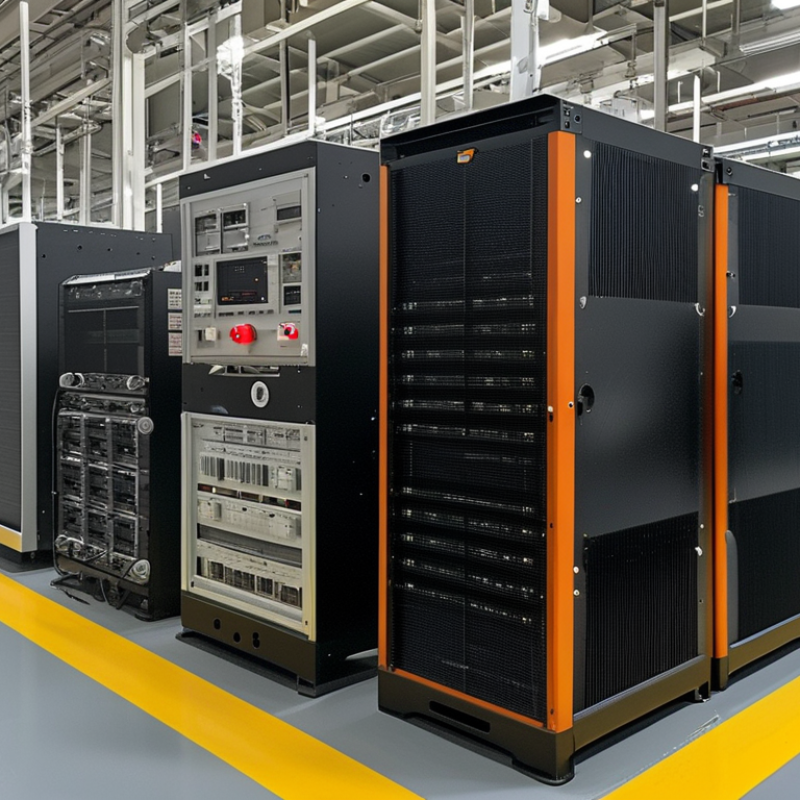
For power supply manufacturers, CE marking is not a quality award or a single laboratory certificate. It is the manufacturer’s legal declaration that a product meets applicable European Union requirements. These may include the Low Voltage Directive, EMC Directive, RoHS rules, and energy-efficiency requirements.
Technical evidence usually covers insulation spacing, leakage current, electromagnetic emissions, temperature rise, and abnormal-operation tests. The harmonised standard EN IEC 62368-1 is widely used for many modern power supplies.
The paperwork matters as much as the circuit design.
A complete technical file should include schematics, critical-component records, risk assessment, test reports, user instructions, and a signed EU Declaration of Conformity.
The European Commission’s Safety Gate 2023 report recorded 3,412 product alerts and 4,287 follow-up actions.
This shows why traceability and market surveillance cannot be treated as paperwork alone. A certificate can support compliance, but it does not replace the manufacturer’s responsibility. That distinction is often misunderstood.
Tips:
Keep production samples, test revisions, and supplier declarations linked by model number.
Recheck EMC performance after changing a transformer, enclosure, or switching controller. Small changes can create large failures.
Independent testing improves credibility, although it cannot correct weak engineering.
IEC market-surveillance guidance also encourages documented corrective actions and clear technical records.
In practice, documentation is often the weakest point. Manufacturers should review it before shipment, not after an authority asks for evidence.
Request the current EU Declaration of Conformity and complete test reports. Check the exact model, input range, output rating, and enclosure design. Generic certificates are risky. Documents can still contain mistakes.
No. CE marking confirms conformity with applicable European requirements. It does not guarantee superior reliability, efficiency, or long service life. Review testing, construction, failure records, and warranty support. A logo proves less than many buyers expect.
Ask about insulation resistance, leakage current, electromagnetic compatibility, overload, and temperature-rise testing. Also discuss short-circuit, surge, and thermal protection. Request results under low voltage and full load. Sudden load changes matter too.
Use your actual load whenever possible. Measure output stability at low voltage, full load, and elevated temperature. Check output ripple, efficiency, fan noise, and protection responses. Do not test only once. One sample proves little.
Examine solder joints, cable strain relief, fuse selection, and ventilation paths. Review terminal spacing and component identification. A quiet 120 mm fan may support cooling, but airflow still needs verification. Small details reveal production discipline.
Inspect SMT equipment, automated optical inspection, burn-in rooms, test benches, and staffing. Compare claimed monthly output with documented inspection records. Ask for annual tested output and batch traceability. Large numbers can be difficult to verify.
Watch whether operators follow written work instructions. Check if failed units are isolated, analyzed, and recorded. Review incoming component checks and final inspection procedures. Ask about calibration dates for testing equipment. A polished tour is not enough.
Compare technical fit, lead times, minimum order quantities, warranty terms, and spare-parts support. Review failure analysis records and design-change notifications. Request samples from different production dates when possible. Clear limitations may be more trustworthy than perfect promises.
This guide presents a practical overview of China’s top 10 CE certified power supply manufacturers, focusing on how compliance, engineering capability, and production reliability shape their market position. It explains what CE certification means for power supply manufacturers, including conformity with essential safety, electromagnetic compatibility, and environmental requirements. Readers will also learn how to evaluate suppliers through certification validity, product range, testing procedures, quality management, customization services, delivery performance, and manufacturing capacity.
The article compares leading manufacturers across product applications, technical specifications, quality controls, certification coverage, and scalability without focusing on brand names. It also explains how to select the most suitable supplier by matching power requirements, operating conditions, target markets, budget, minimum order quantities, and after-sales expectations. Whether sourcing standard or customized equipment, buyers can use this framework to assess Ce Certification Power Supply providers more objectively and reduce purchasing risks through clear documentation, sample testing, factory audits, and transparent communication.

 Highfly