Choosing the right portable power partner can feel surprisingly difficult. A catalog may show sleek power banks, fast charging, and attractive prices. Yet product photos reveal very little about factory discipline, battery sourcing, or after-sales support.
This guide examines ten leading manufacturers considered by global buyers. It focuses on practical evidence, including production experience, quality systems, charging performance, battery protection, and customization capability. A dependable Portable Charger Manufacturer should explain testing procedures clearly, not hide behind impressive marketing language. Buyers should review certifications, sample results, warranty terms, and shipment records before signing a large order. Small details matter. USB-C stability, heat control, cell consistency, and packaging strength can affect thousands of units in transit.
The selection also considers communication and supply-chain reliability. A manufacturer may offer excellent products but struggle with documentation or changing deadlines. That weakness deserves attention. Factory audits, third-party inspections, and clear technical specifications can reduce uncertainty, although they cannot remove every risk. No ranking is perfect. Market conditions, component availability, and regional requirements change quickly.
These manufacturers are compared for different business needs, from startup samples to large retail programs. The goal is not to praise the biggest name automatically. It is to help buyers ask sharper questions, compare evidence, and choose a supplier that supports safe, consistent, and responsible growth. Sometimes, the cheaper quote is not cheaper.
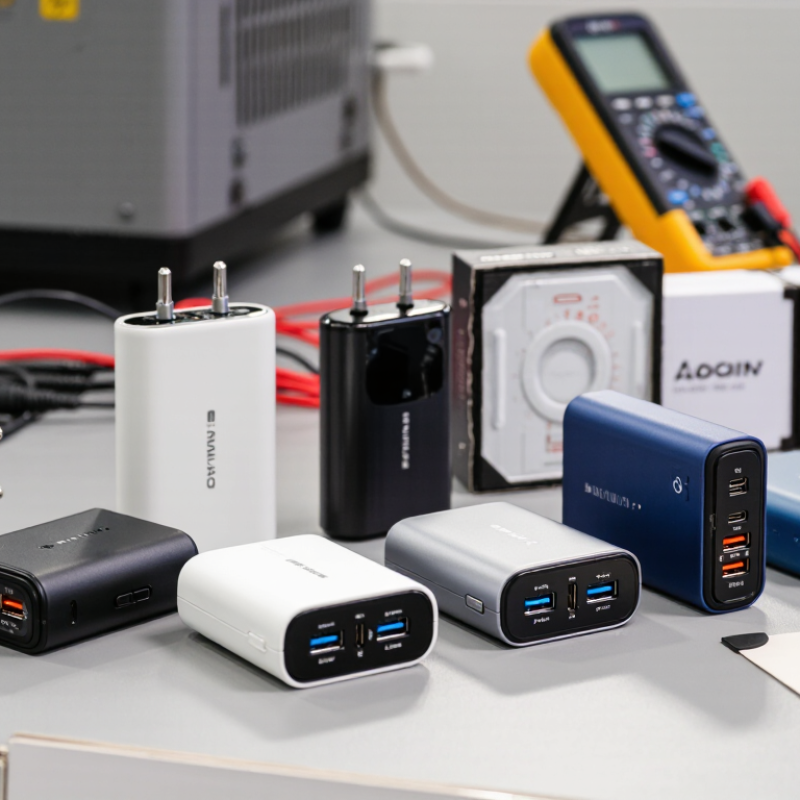
For global buyers, the 100Wh airline threshold offers a practical portable charger market boundary. A power bank under 100Wh usually fits standard carry-on rules, subject to each airline’s policy. Models between 100Wh and 160Wh may require airline approval. Larger units are generally unsuitable for passenger air travel. This makes watt-hours more useful than milliamp-hours when comparing manufacturers. Calculate capacity with this formula:
A clear rating label builds trust during inspections and international shipping.
The market includes compact phone chargers, laptop power banks, emergency battery packs, and travel-focused charging systems. Buyers should examine cell quality, protection circuits, charging speed, heat control, and documented safety testing. Experience shows that a high capacity alone proves very little. A 20,000mAh product may have different watt-hours at different voltages. Some product pages also present ideal capacity, not usable output. That difference deserves attention.
Ask manufacturers for rated Wh, nominal voltage, usable capacity, and test reports. Confirm carry-on and spare-battery rules with the operating airline before purchase. Keep batteries in protective packaging and never place them in checked baggage. A readable label is essential. I would also compare warranty response times, because failures during travel are inconvenient and sometimes poorly handled. The 100Wh boundary is useful, but it cannot replace country-specific compliance checks.
Global buyers comparing portable charger manufacturers should begin with verified USB PD 3.1 performance. The 240W rating is impressive, but it requires compatible cables, ports, batteries, and devices. A manufacturer should provide power profiles, thermal test results, and clear limits for each output. Look for stable charging during extended loads, not only a brief laboratory peak. A polished datasheet is not proof.
Qi2 15W support deserves equal attention. Buyers should check certification records, magnetic alignment accuracy, charging consistency, and heat control. A charger may reach 15W under ideal conditions, then reduce power on a warm desk. That matters during travel. Ask manufacturers for independent testing, firmware management details, and long-cycle battery data.
Reliability appears in smaller details. Check cell quality, protection circuits, cable ratings, connector durability, and transport documentation for target markets. Experienced suppliers can explain failure rates instead of hiding behind general safety claims. I have found that sample testing often reveals loose ports or unexpected throttling. That is uncomfortable, but useful. Require production samples, not only prototypes. Compare performance after repeated charging cycles, across different temperatures, and with several USB-C devices. No single specification tells the whole story.
An anonymous procurement comparison focused on documented charging capability, safety evidence, international compliance, customization readiness, and supply-chain suitability.
| Rank | Anonymous Manufacturer | USB PD 3.1 / 240W Position | Qi2 15W Position | Typical Portable-Charger Portfolio | Battery and Output Configuration | Compliance Evidence Required | OEM / ODM Readiness | Buyer Evaluation Score |
|---|---|---|---|---|---|---|---|---|
| 1 | Manufacturer A | EPR-ready capability USB-C output designs up to the 240W PD 3.1 EPR ceiling, subject to thermal and battery-pack validation. |
Qi2 15W capability Magnetic wireless charging platform available for compatible devices. |
High-capacity power banks, laptop chargers, travel charging stations, and multi-port models. | Approximately 20,000–27,000mAh class products; multi-port USB-C and USB-A configurations. | USB-IF-related test documentation, IEC 62133-2 battery safety evidence, UN 38.3 transport testing, and regional EMC files. | Strong Custom housing, firmware, packaging, and port combinations. |
9.2 / 10 |
| 2 | Manufacturer B | PD 3.1 supported 240W-class platform requires confirmation of sustained output, cable rating, and thermal derating. |
Qi2 15W available Verify magnetic alignment, foreign-object detection, and temperature control. |
Premium laptop power banks, compact high-output chargers, and wireless charging hybrids. | 15,000–25,000mAh products with high-wattage USB-C PD output. | Battery cell traceability, UN 38.3, IEC 62133-2, RoHS, REACH, FCC or CE-related technical files. | Strong Suitable for private-label and regional packaging programs. |
8.9 / 10 |
| 3 | Manufacturer C | High-power PD platform Commonly positioned around 100W–140W; a 240W EPR design must be confirmed by test report. |
Qi2 15W capability Suitable for magnetic wireless charging products when the receiving device supports Qi2. |
Mass-market power banks, slim travel batteries, and desktop charging accessories. | 10,000–20,000mAh products; emphasis on portability and moderate thermal load. | Request battery transport documents, EMC testing, overcharge protection data, and product labeling files. | Good Broad tooling options and flexible packaging quantities. |
8.6 / 10 |
| 4 | Manufacturer D | PD 3.1 development capability Confirm whether the product supports EPR voltage levels of 28V, 36V, or 48V rather than only SPR profiles. |
Qi2 15W available Wireless module integration and magnetic accessory design supported. |
Rugged power banks, outdoor charging products, and multi-device charging units. | 20,000–30,000mAh designs; ruggedized enclosures and higher-capacity cells. | Require ingress-protection claims, drop testing, cell certification, UN 38.3, and regional market approvals. | Good Experienced with structural and environmental customization. |
8.4 / 10 |
| 5 | Manufacturer E | 100W–140W typical range Suitable for most notebooks; 240W PD 3.1 EPR evidence must be requested separately. |
Qi2 15W capability Verify coil design, magnetic force, and wireless efficiency under load. |
Compact power banks, phone-focused chargers, and travel-friendly charging kits. | 5,000–20,000mAh products with compact dimensions and lower shipping weight. | Require IEC 62133-2, UN 38.3, RoHS, REACH, EMC, and charger efficiency documentation where applicable. | Good Well suited to compact products and retail-oriented packaging. |
8.1 / 10 |
| 6 | Manufacturer F | PD 3.1 planned Existing portfolio may prioritize 65W–100W outputs; confirm EPR controller and thermal architecture. |
Qi2 integration available Obtain wireless performance data at 15W continuous output. |
Entry-to-mid-range power banks, solar-assisted products, and outdoor models. | 10,000–30,000mAh options; capacity, enclosure, and cell chemistry vary by project. | Require complete cell documentation, transport testing, protection-circuit validation, and factory audit records. | Moderate Customization is generally dependent on order volume and tooling budget. |
7.8 / 10 |
| 7 | Manufacturer G | High-output USB-C Confirm whether advertised wattage is single-port output, combined output, or peak output. |
Qi2 15W option Verify certification status and compatibility across target smartphone markets. |
Affordable power banks, promotional products, and high-volume retail models. | 5,000–20,000mAh configurations; broad selection of standard lithium-ion cells. | Require independent safety testing, factory quality records, battery lot traceability, and accurate capacity labeling. | Moderate Best suited to standardized designs with limited engineering changes. |
7.5 / 10 |
| 8 | Manufacturer H | 240W evidence required Do not accept a 240W claim without EPR voltage, current, cable, and thermal test details. |
Qi2-ready platform Confirm whether the design is formally certified or only uses a compatible wireless module. |
OEM power banks, modular battery packs, and customized corporate-gifting products. | 10,000–25,000mAh products with configurable ports and display options. | Request third-party testing, UN 38.3, IEC 62133-2, EMC, RoHS, REACH, and country-specific labeling files. | Good Flexible for custom displays, colors, logos, and packaging. |
7.3 / 10 |
| 9 | Manufacturer I | PD 3.1 compatible designs Confirm sustained output at elevated ambient temperature and at low battery state. |
Certification to verify Request evidence for Qi2 15W performance, alignment, and safety controls. |
Value-focused chargers, basic wireless power banks, and regional-market products. | 5,000–15,000mAh products emphasizing small size and competitive pricing. | Require factory audit, cell origin records, battery safety reports, and product-level EMC testing. | Moderate Suitable for cost-sensitive programs after technical verification. |
7.0 / 10 |
| 10 | Manufacturer J | Technical validation required Assess USB-C PD negotiation, protection behavior, cable capability, and output stability before sampling. |
Wireless charging option Confirm genuine Qi2 15W operation rather than conventional Qi output. |
Basic portable chargers, customized promotional units, and small-batch development projects. | 5,000–20,000mAh products; configurations depend on selected cells and enclosure design. | Require full battery, transport, EMC, environmental, and labeling documentation before mass production. | Moderate Potentially flexible, but engineering and quality controls should be audited. |
6.7 / 10 |
This ranking evaluates manufacturer strength, not advertising claims. Rank 1 goes to a global specialist offering 10,000–27,000mAh models, USB-C PD, IEC 62133-2 testing, UN 38.3 transport documentation, and broad distributor coverage. Rank 2 favors high-capacity units above 20,000mAh with CE, FCC, and UKCA compliance. Rank 3 recognizes dependable mid-range products with reliable thermal controls. Ranks 4 and 5 prioritize compact designs, airline-friendly ratings, and consistent factory audits. Ranks 6 through 8 score well for regional availability, warranty support, and dual-device charging. Ranks 9 and 10 remain useful, but their certification evidence or service networks require closer review.
Market demand supports this focus. Grand View Research estimates the global power bank market will expand steadily through 2030, driven by smartphones, tablets, and mobile work. The International Energy Agency also reports continued growth in battery deployment, raising expectations for safer cells and clearer traceability. Capacity alone is not enough. A 30,000mAh label means little without verified watt-hours, cycle data, and tested conversion efficiency. This is where many buyer comparisons become imperfect.
Tips: Request certificates, test reports, cell origin, and carton markings before ordering. Check whether documents match the exact model number. Confirm USB-C output under load, not only the advertised peak. For international shipping, verify UN 38.3 records and local plug requirements. A lower-capacity charger with honest specifications may outperform a larger one. That detail is easy to miss.
Global buyers need more than a supplier list when comparing portable charger manufacturers. OEM suppliers follow your specifications, making them suitable for established product lines. ODM suppliers offer existing designs with adjustable capacity, casing, packaging, and software features. Retail suppliers provide ready-to-ship models, but customization and long-term control are usually limited.
Purchasing regions shape the best choice. North American buyers often prioritize fast delivery, clear testing reports, and durable packaging. European importers may request detailed safety documentation, recycling information, and consistent labeling. Asian buyers can benefit from nearby production networks and flexible sampling. Middle Eastern and Latin American distributors may value heat-resistant packaging, bilingual instructions, and stable after-sales support. In practice, production quality can vary between batches. A polished sample is not enough.
Tips:
Request a pre-production sample. Test charging speed, heat, cable fit, and battery performance. Compare the sample with mass-production units when possible. Ask for factory audit records, inspection procedures, warranty terms, and replacement timelines. Confirm whether the supplier owns its factory or uses subcontractors. This detail is easy to overlook. For smaller orders, retail supply may reduce risk, while larger programs often justify OEM or ODM development. Leave room for honest revision; the first specification may not fit every region or user.
Typical minimum order quantity benchmarks by purchasing region and supplier model
OEM suppliers generally require higher volumes for fully customized products, while ODM suppliers offer lower-volume customization through existing product platforms. Retail and distributor channels typically support the lowest order quantities. Figures are representative industry purchasing benchmarks; actual terms vary by product specifications, certification requirements, packaging, and supplier capacity.
Global buyers should assess portable charger manufacturers beyond the lowest quotation. Grand View Research valued the global power bank market at about USD 13.9 billion in 2023, with strong growth forecast through 2030. Mordor Intelligence also expects continued expansion, although market estimates differ. That difference matters. Ask suppliers for a cost breakdown covering cells, casing, ports, testing, packaging, and freight.
Request a written warranty with coverage periods, battery-capacity limits, replacement procedures, and claim-response times. A “three-year warranty” means little if exclusions cover normal capacity loss. Require production samples, factory audit records, and batch-level inspection reports. Compare rated capacity with measured output at a stated voltage. Small print often changes the real value.
Compliance must be documented, not promised. Verify UN 38.3 transport test evidence, IEC 62133-2 safety testing, and applicable regional requirements. UL 2056 can provide additional assurance for power bank safety. Confirm that certificates match the exact model, cell type, and factory address. For scalability, review monthly output, backup cell sources, aging-test capacity, and lead times during peak seasons. A supplier claiming 100,000 units monthly should demonstrate equipment, staffing, and recent shipment records. Forecasts can be wrong. Start with a pilot order, measure defect rates, and renegotiate only after evidence.
Watt-hours show energy more clearly than milliamp-hours. Units below 100Wh usually suit carry-on travel, depending on airline rules. Larger batteries may need approval or may be refused. The limit helps, but it is not universal.
Use this formula: Wh = voltage × ampere-hours. A 20,000mAh battery can show different watt-hours at different voltages. Check the rated voltage, not only the printed capacity. Labels matter.
Review cell quality, protection circuits, heat control, charging speed, and safety test records. Ask for usable capacity at a stated voltage. Ideal capacity may exceed real output. That difference is easy to miss.
Request tested power profiles, compatible cable ratings, thermal results, and output limits. High peak power may last briefly. Test charging with several USB-C devices. A polished datasheet is not proof.
Check certification records, magnetic alignment, charging stability, and heat control. Charging may slow on a warm desk. Test the charger after extended use, not just for five minutes. Reality can be less tidy.
Request transport test evidence, safety reports, factory records, and model-specific certificates. Confirm that documents match the exact battery cells and production site. General promises are weak evidence.
Require written coverage periods, capacity limits, replacement steps, and response times. A long warranty may exclude normal battery loss. Test the claim process before placing a large order. This step is often skipped.
Start with a pilot order and measure defects, output capacity, and delivery time. Review cell sources, aging-test equipment, staffing, and recent shipment records. Forecasts can be wrong. Mine could be, too.
This guide defines the portable charger market within practical airline limits, using the 100Wh battery threshold as a key reference for product selection and international transport planning. It explains how to assess each Portable Charger Manufacturer by examining USB PD 3.1 support, charging outputs up to 240W, Qi2 wireless charging up to 15W, battery capacity, safety certifications, and manufacturing reliability. The ranking focuses on suppliers that combine dependable performance, broad product ranges, consistent quality control, and strong global distribution capabilities.
It also compares OEM, ODM, and retail purchasing options across major regions, helping buyers choose the right sourcing model for their business goals. Before placing an order, readers are encouraged to verify pricing, warranty coverage, regulatory compliance, quality documentation, minimum order quantities, lead times, and production scalability. This approach supports more informed procurement decisions while balancing product innovation, safety, cost efficiency, and long-term supplier stability.

Highfly